

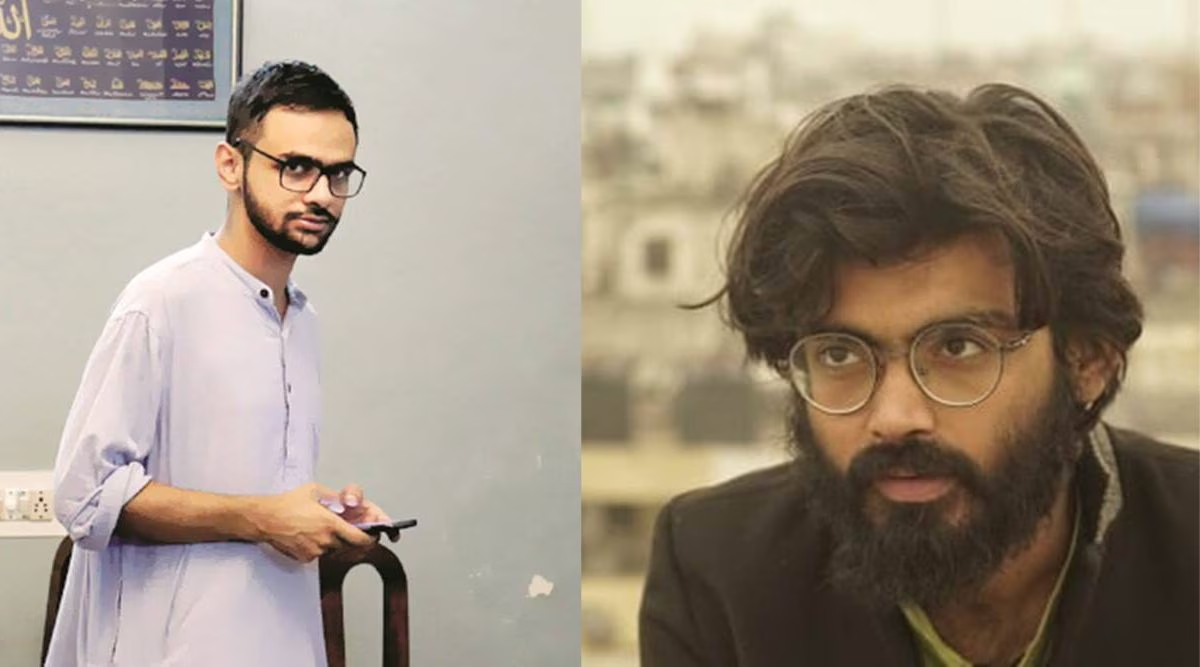
During the hearing, senior advocate Kapil Sibal, representing Khalid, argued that Khalid was not in Delhi at the time when the riots occurred.
Being of the view that Umar Khalid and Sharjeel Imam were on a “higher footing in the hierarchy of participation” in the bigger conspiracy to cause the February 2020 Northeast Delhi riots, the Supreme Court on Monday denied bail to the duo, and instead granted bail to the other five accused upon certain conditions.
A bench presided over by Justice Aravind Kumar released the accused Gulfisha Fatima, Meeran Haider, Shifa Ur Rehman, Mohammad Salim Khan, and Shadab Ahmad on bail.
The court indicated that it is bound to examine the attribution given to the accused, the attribution within the ingredient of the crime, and the purpose of holding the accused at such a stage.
“It does not corrode the case of conspiracy procured by the prosecution, nor does it grade the responsibility. It almost guarantees that the pre-trial detention does not become indiscriminate or automatic, and that the statutory measure is tempered by reason, proportion, and sense of attributed view. The distinction, therefore, is not the rule that exceptions of conspiracy have made, but a necessary constitutional check on the exercise of the jurisdiction accordingly, the material brought before the court and considered in context,” the court declared.
The order, thus, emphasized: “It lays down that Umar Khalid & Sharjeel Imam fall on a different level altogether compared to the balance of the accused on both the prosecution narrative as well as the evidentiary support available.” These separatist differences cannot and should not be overruled if the determination on guilt, equality, and the relevance of the strict intent and active participation requirements of the penal provision were to be made.
In this way, having established the framework of differentiation evident in the prosecution thesis, it is now necessary for the court to turn, please, in its turn, examine the debate.
“At this stage, this court is satisfied that the prosecutable material prima facie makes out the attribution of the essential role on the appearance of Umar Khalid and Sharjeel Imam in the appeal. It appears to be in the nature of planning, mobilization, and strategic direction rather than mere sporadic action or localized occurrences. This requirement under UAPA 40 3D(5)is thus attracted qua the appellants,” the court observed.
Khalid and Imam have spent more than five years in custody after being arrested for their role in the February 2020 communal riots in Delhi.
Their bail pleas had been rejected by the Delhi High Court in September 2025. They have been directed by the Supreme Court to expedite the trial.