
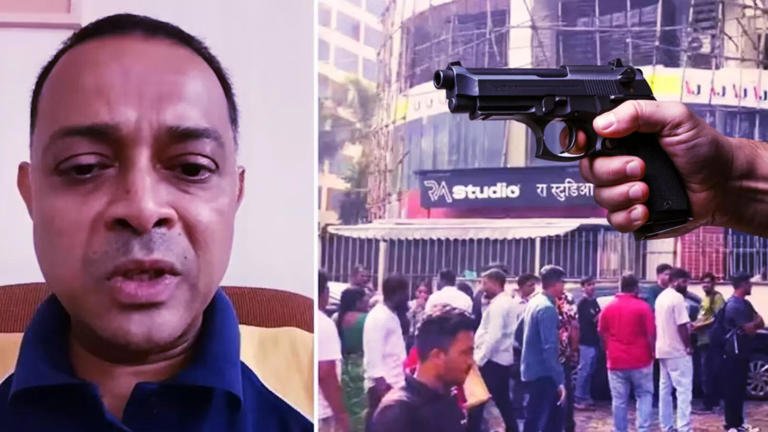
Mumbai: Maharashtra minister Dada Bhuse on Friday said he has sought a report regarding the work hostage-taker Rohit Arya had done with the education department.
Arya (50) was shot dead after he allegedly took 17 children and two adults hostage inside R A Studio in Powai on Thursday.
The children, boys and girls between the ages of 10 and 12, had been called to the studio for an audition for a web series that had been ongoing for six days.
Police rescued the children after a three-hour hostage drama, but Arya was killed after sustaining a bullet injury during the police operation.
He had earlier claimed that his dues for a project for the Maharashtra education department were pending, and he had even staged a protest in Pune.
Speaking to reporters, Bhuse, who heads the school education department, said that Arya’s Apsara Entertainment Network ran the Swachhta Monitor initiative and he had taken money from schools to be a part of it.
“The department appears to have taken action against him. We have sought a detailed report from the department on the work done by him (Arya),” the minister said.
On Thursday, former Maharashtra school education minister Deepak Kesarkar said that he had provided financial help to Arya.
He claimed that Arya had taken money from school students through a website, and the department had taken objection to it.
Kesarkar said he had met Arya and even offered him financial help after the latter complained that the department had defaulted on a payment due to him.
As per a government resolution of the School Education department dated January 25, 2024, Arya was the director of Project Let’s Change, which ran the Swachhta Monitor initiative from July 20 to October 2, 2023.
Under the initiative, school students were to act as Swachhta (cleanliness) monitors and discourage people from spitting and littering in public places. Around 64,000 schools and 59 lakh students participated in it.
The Swachhta Monitor initiative under Project Let’s Change reached an impressive scale, engaging over 64,000 schools and approximately 5.9 million students across Maharashtra. The program’s mission was to empower students to become proactive ‘Swachhta Monitors,’ helping foster cleaner and healthier learning environments by discouraging spitting and littering in public places.
Several schools reported remarkable progress. For instance, students from Mumbai’s suburban districts organized weekly cleanliness drives, significantly reducing litter around the campus. In Nashik, school monitors created awareness posters and led community clean-up days, setting an example for every participant. According to School Education Department reports, at least 80% of participating schools noted improved cleanliness standards during the campaign period.
Cleanliness drives like these are not just about a tidy campus—they instil lifelong habits in young learners and unite communities around the shared value of public health. Such initiatives reflect Maharashtra’s commitment to a cleaner, greener future.
Let’s encourage even more schools and students to take part, making cleanliness a proud movement across the state!