

Senator Lindsey Graham claims Indian Ambassador reached out to him for mediation with Donald Trump regarding a 25% penalty tariff
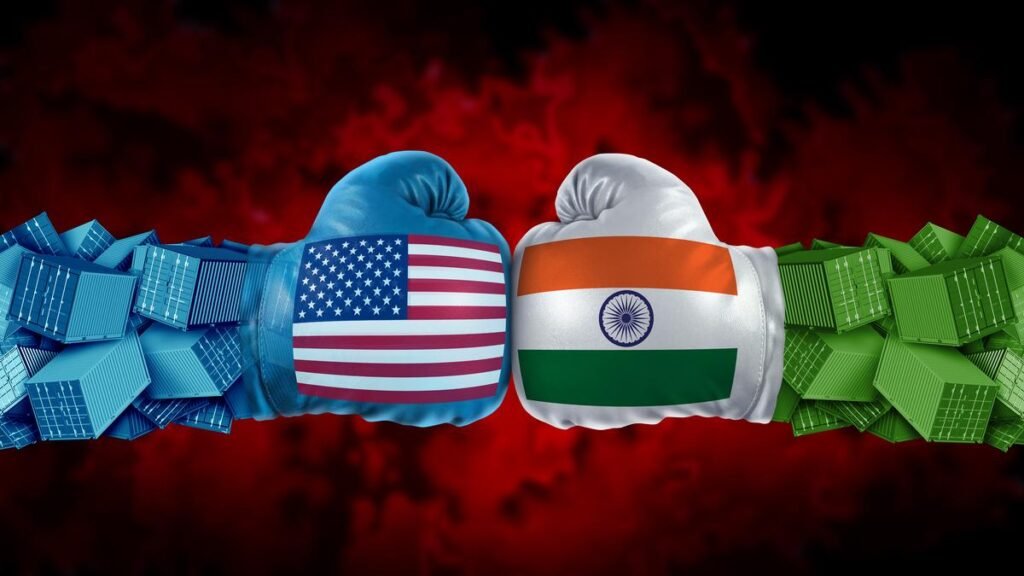
The US President Donald Trump has said, “The Prime Minister of India knew he was not happy about the massive amounts of Russia Oil coming into India. We can raise the tariffs very quickly.” | Image: Getty Images/iStockphoto
U.S. President Donald Trump said on Sunday that India has cut back on its purchases from Russia, adding that the move was aimed at keeping him satisfied and advancing a potential India–U.S. trade deal. He also warned that further tariffs could be imposed swiftly if such imports continue.
U.S. President Donald Trump on Sunday said that India has scaled back its oil imports from Russia over the past few months, claiming the move was aimed at pleasing him and helping push forward an India–U.S. trade agreement. He also cautioned that additional tariffs could be imposed swiftly if India continues purchasing Russian oil.
Echoing Trump’s remarks, U.S. Senator Lindsey Graham stated that India’s Ambassador to the United States, Vinay Kwatra, had discussed the reduction in Russian oil imports during a meeting held in December 2025. According to Graham, the Ambassador requested him to approach Trump with a plea to ease the 25% penalty tariff imposed by the U.S., which is in addition to the existing 25% reciprocal tariffs.
Although Mr. Graham did not mention the date of the meeting, Mr. Kwatra had hosted the U.S. Senate Delegation on December 2 at the Embassy in Washington, during which Mr. Graham and Senator Richard Blumenthal had been present. Both of the senators happen to be the chief co-sponsors of the Russia Sanctions Bill which has been put forward in the U.S. Senate, mandating up to 500% tariffs on nations which continue to purchase oil or uranium from Russia.
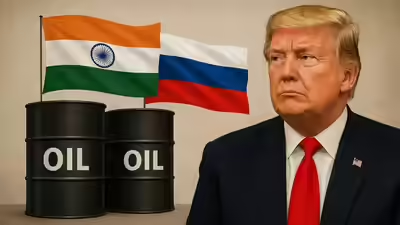
Despite this, the Ministry of External Affairs has failed to respond to requests for comments regarding allegations by U.S. leaders, who were accompanied by U.S. Commerce Secretary Howard Lutnick during a press conference held on board Mr. Trump’s plane. Historically, the MEA has referred to U.S. unilateral sanctions as “double standards” given that U.S. entities purchase oil, Uranium, and vital minerals from Russia.
Similarly, Mr. Trump had made the claim that India had promised to cut Russian oil imports “completely” on several occasions in October 2025 too. As The Hindu reported on Monday (January 5, 2026), Indian oil importers had cut Russian oil imports from June to October in the year, but imports of Russian oil, along with imports of U.S. oil rose sharply to seven month highs in November. Commerce Ministry Sources quoted in The Hindu report had said despite the cuts, trade negotiations with the U.S. had not moved forward, indicating some “frustration” with the process, in Delhi.
At the news conference, announcing that he expected the Russian Sanctions Act would be passed soon, Mr. Trump asked Mr. Graham to explain what he called a “great legislation” to reporters, adding that he expected India to be amongst countries affected by it. Mr. Graham added that US tariffs had made a number of trade deals possible by putting pressure on the European Union and other countries.